
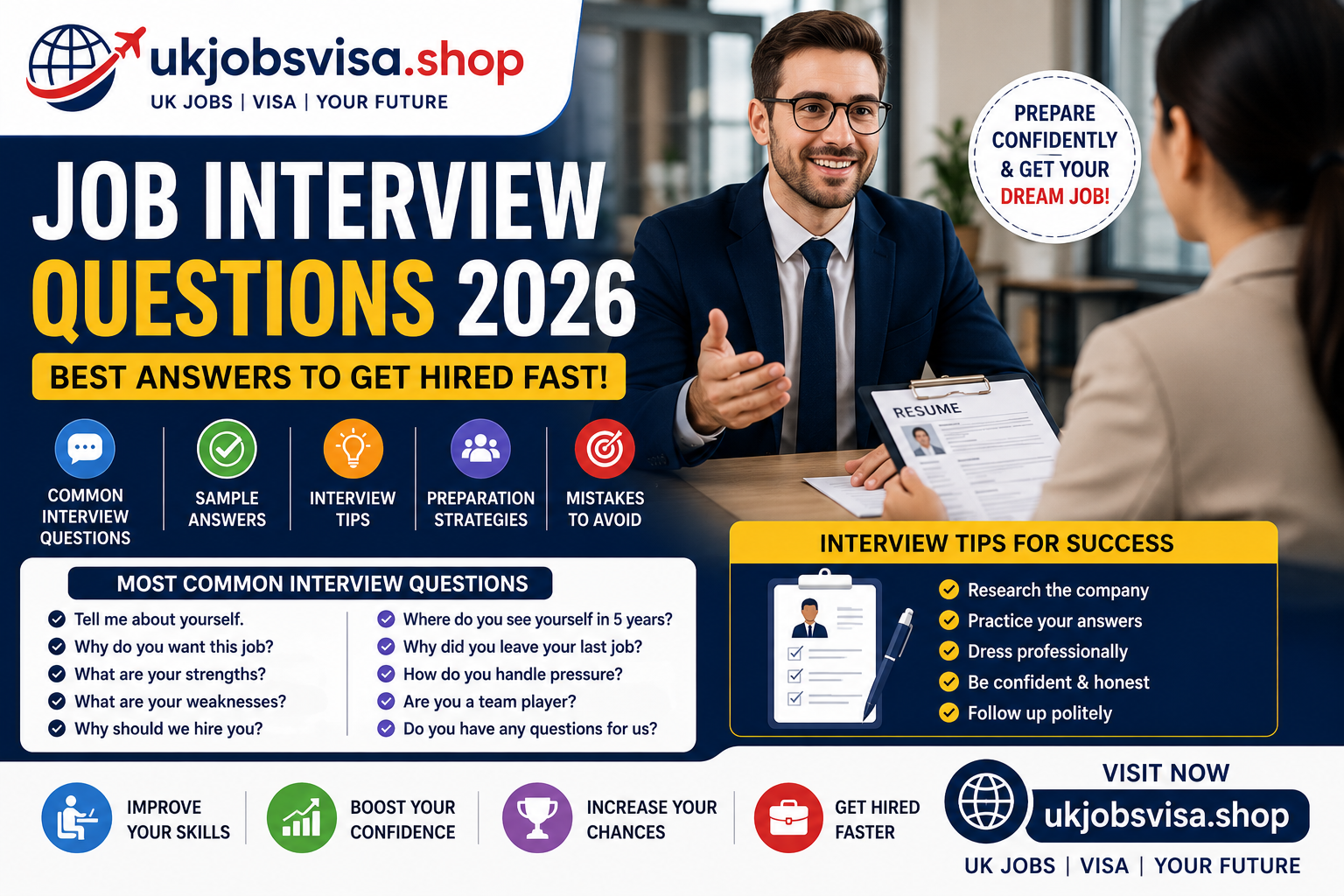
Job Interview Questions 2026 – Best Answers to Get Hired Fast
Introduction
Job Interview Questions of the most important steps in getting hired. Whether you are applying for a full-time job, part-time role, remote work, or an international opportunity, employers usually conduct interviews to learn more about your skills, personality, and experience.
In 2026, companies are using both online and in-person interviews to hire employees. Many job seekers feel nervous during interviews because they do not know what questions employers may ask. However, proper preparation can greatly increase your chances of success.
Understanding the most common job interview questions and learning how to answer them professionally can help you stand out from other applicants. Employers look for confidence, communication skills, honesty, and problem-solving abilities during interviews.
This guide covers the most frequently asked interview questions, sample answers, preparation tips, mistakes to avoid, and strategies to help you get hired faster.
Why Job Interviews Are Important
Job interviews help employers decide whether a candidate is suitable for the position.
During interviews, employers evaluate:
- Communication skills
- Confidence level
- Work experience
- Personality
- Problem-solving ability
- Professional attitude
A successful interview can lead directly to a job offer.
Types of Job Interviews
Different companies use different interview styles.
Phone Interviews
Phone interviews are usually the first screening step. Employers ask basic questions about your background and availability.
Video Interviews
Video interviews are very common in 2026. Companies use Zoom, Google Meet, or Microsoft Teams for online hiring.
Face-to-Face Interviews
Traditional office interviews allow employers to assess candidates directly.
Group Interviews
Some companies interview multiple candidates together to evaluate teamwork and communication skills.
Most Common Job Interview Questions and Answers
Tell Me About Yourself
This is usually the first interview question.
Best Answer:
Introduce yourself briefly, mention your experience, skills, and career goals.
Example:
“I am a hardworking and motivated person with experience in customer service and teamwork. I enjoy learning new skills and improving my professional abilities. I am currently looking for an opportunity where I can grow my career and contribute positively to the company.”
Why Do You Want This Job?
Employers ask this to understand your interest in the company.
Best Answer:
Explain what attracts you to the role and how your skills match the position.
Example:
“I want this job because I believe my communication and organizational skills match the role perfectly. I also admire your company’s reputation and growth opportunities.”
What Are Your Strengths?
Choose strengths related to the job.
Examples:
- Communication skills
- Teamwork
- Problem-solving
- Time management
- Leadership
Example:
“One of my biggest strengths is my ability to work well under pressure while maintaining high-quality results.”
What Are Your Weaknesses?
Mention a real weakness but show improvement.
Example:
“I sometimes focus too much on details, but I am learning to manage my time more effectively.”
Why Should We Hire You?
Employers want to know what makes you different from other candidates.
Best Answer:
Highlight your skills, experience, and positive attitude.
Example:
“I am a dedicated worker with strong communication skills and a willingness to learn quickly. I believe I can contribute positively to your team and help achieve company goals.”
Where Do You See Yourself in 5 Years?
Employers prefer candidates with long-term goals.
Example:
“In five years, I hope to improve my professional skills, gain more responsibilities, and grow within the company.”
Why Did You Leave Your Previous Job?
Avoid speaking negatively about previous employers.
Example:
“I wanted better career growth opportunities and new challenges to improve my skills.”
How Do You Handle Pressure?
Employers want workers who can stay calm during difficult situations.
Example:
“I stay organized, prioritize tasks, and focus on solving problems calmly under pressure.”
Are You a Team Player?
Most jobs require teamwork skills.
Example:
“Yes, I enjoy collaborating with others, sharing ideas, and supporting team members to achieve goals together.”
Do You Have Any Questions for Us?
Always ask at least one professional question.
Good Questions:
- What does a typical workday look like?
- What are the growth opportunities in this role?
- What qualities make someone successful in this company?
Interview Questions for Freshers
Fresh graduates may have little work experience, but employers still value confidence and willingness to learn.
Common fresher interview questions include:
- Why did you choose your field of study?
- What are your career goals?
- What skills can you bring to this company?
- Are you willing to learn new things?
Freshers should focus on education, internships, communication skills, and a positive attitude.
Interview Questions for Experienced Candidates
Experienced professionals may face more technical and role-specific questions.
Examples include:
- Describe a challenge you solved at work.
- How do you manage deadlines?
- Tell us about your leadership experience.
- How do you handle workplace conflict?
Use real examples from previous jobs while answering.
How to Prepare for a Job Interview
Research the Company
Learn about:
- Company background
- Products or services
- Work culture
- Recent news
This shows professionalism and interest.
Practice Common Questions
Practice answering interview questions confidently.
You can practice:
- In front of a mirror
- With friends
- Using mock interviews online
Prepare Your Documents
Carry:
- CV or resume
- Certificates
- Identification documents
- Portfolio if needed
Dress Professionally
Your appearance creates the first impression.
Wear:
- Clean clothes
- Formal or smart casual dress
- Proper shoes
Arrive Early
Try to arrive 10–15 minutes before the interview.
For online interviews:
- Check the internet connection
- Test the microphone and the camera
Job Interview Tips for Success
Speak Clearly
Maintain good communication and avoid speaking too fast.
Maintain Eye Contact
Eye contact shows confidence and honesty.
Stay Positive
Avoid negative comments about previous jobs or employers.
Show Confidence
Believe in your skills and stay calm.
Listen Carefully
Understand the question fully before answering.
Common Interview Mistakes to Avoid
Arriving Late
Being late creates a negative impression immediately.
Giving Short Answers
Try to explain answers clearly with examples.
Lack of Preparation
Research the company before attending interviews.
Poor Body Language
Avoid crossing arms, looking down, or appearing distracted.
Using Mobile Phones
Keep your phone silent during interviews.
Online Job Interview Tips
Online interviews are now extremely common.
Choose a Quiet Place
Avoid noisy backgrounds during video calls.
Use Good Lighting
Make sure your face is clearly visible.
Dress Professionally
Even online interviews require a professional appearance.
Test Technology Before Interview
Check:
- Camera
- Internet
- Audio
- Software
Best Skills Employers Look For
Companies in 2026 highly value these skills:
- Communication
- Teamwork
- Adaptability
- Leadership
- Time Management
- Computer Skills
- Problem Solving
Improving these skills can increase hiring chances.
Frequently Asked Questions (FAQs)
What are the most common job interview questions?
Questions like “Tell me about yourself,” “Why should we hire you?” and “What are your strengths?” are very common.
How can I pass a job interview easily?
Prepare well, practice answers, research the company, and stay confident.
What should I wear to an interview?
Wear clean and professional clothing suitable for the company environment.
How long do interviews usually last?
Most interviews last between 15 minutes and 1 hour.
Is it okay to be nervous during interviews?
Yes, slight nervousness is normal, but preparation can improve confidence.
What should I bring to an interview?
Bring your CV, certificates, ID documents, and any required portfolio.
How soon should I follow up after an interview?
You can send a polite follow-up email within 24–48 hours.
Conclusion
Preparing for job interviews is one of the most important steps toward building a successful career. Understanding common job interview questions, practicing professional answers, and improving communication skills can greatly increase your chances of getting hired.
Whether you are a fresher, an experienced professional, or applying for your first local or international job, preparation and confidence are the keys to success. Employers want candidates who are honest, motivated, and ready to contribute positively to the company.
Start practicing today, improve your interview skills, and take the next step toward achieving your career goals in 2026.
1 thought on “Job Interview Questions 2026 – Best Answers to Get Hired Fast”